4 Balancing Herbs for the Luteal Phase
There’s no denying that the luteal phase can be tough, and many women and menstruating individuals notice that they don’t quite feel like themselves during this time of the month. In fact, 90% of women report unpleasant symptoms that affect their day-to-day lives in the premenstrual phase (Winer & Rapkin, 2006). This is all thanks to fluctuating hormones like progesterone and cortisol. As they rise, they can have an affect on metabolism, mood, and more. From mild discomfort to premenstrual syndrome (PMS) and even premenstrual dysphoric disorder (PMDD), it’s no wonder that many women are seeking holistic ways to find ease throughout this cycle shift.
Balancing Herbs for the Luteal Phase
In Chinese medicine, the symptoms experienced during the luteal phase are understood as a possible sign of imbalance in the body, especially in the liver. Nurturing balance and stability through the support of herbs and lifestyle practices can work wonders for creating a smoother transition between ovulation and menstruation.
Shifting Phases Are Everywhere
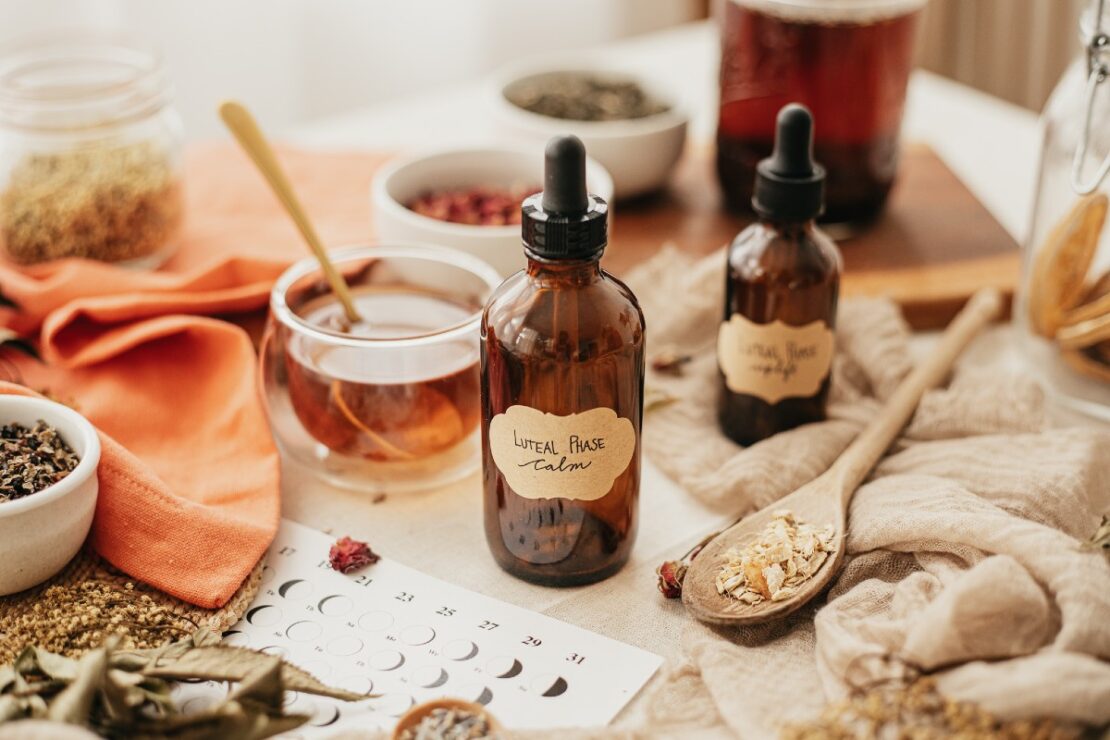
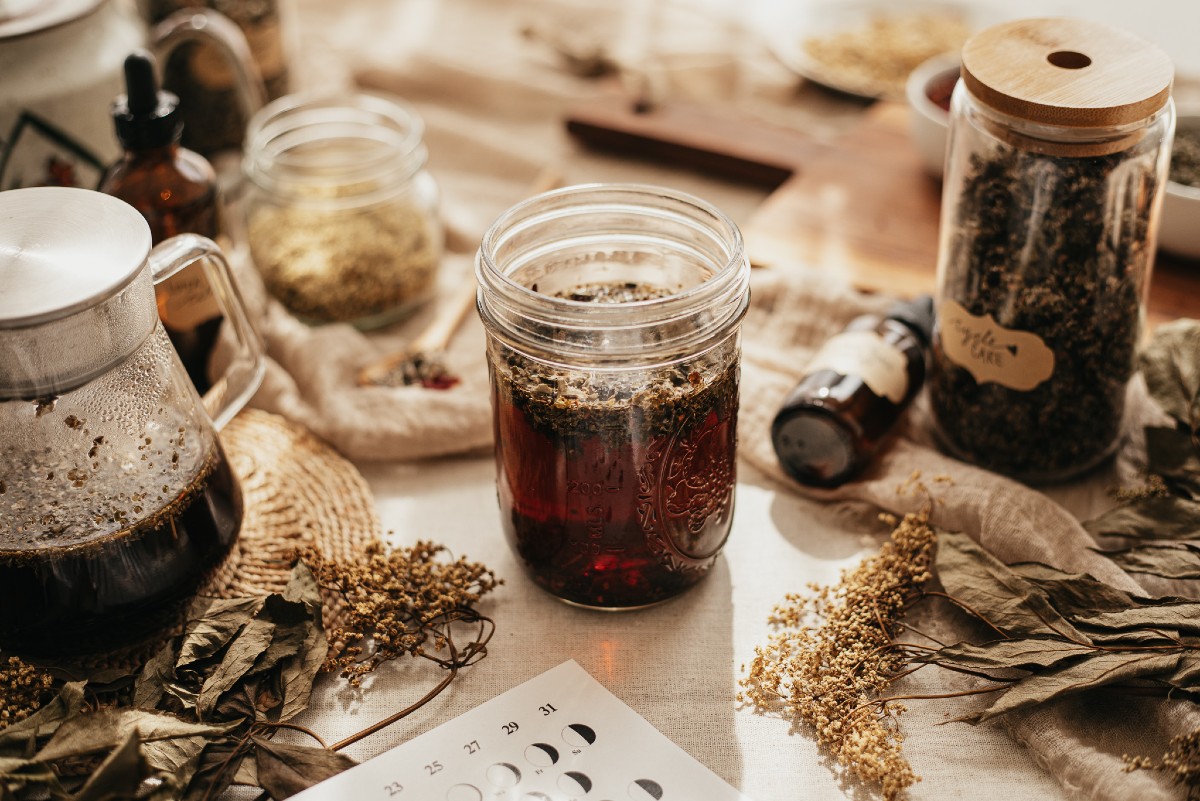
A grounding way to look at the menstrual phase is to notice its mirrors in nature. Every month, the moon goes through phases alongside us, and throughout the year, the seasons do, too. Think of the luteal phase as your waning moon or inner autumn. This is a time to slow down, get cozy, and allow your feelings to move through you, releasing what you no longer need. If you can, try to shift to gentler movement, warm drinks and meals, and soothing self-care rituals.
Sometimes, this is easier said than done. When your foundation feels shaky, and PMS symptoms like irritability, fatigue, and mental fogginess arise, try leaning on these balancing herbs for the luteal phase.
Herbs for the Luteal Phase
This herbal wisdom comes from our 28-Day Menstrual Cycle Workshop: Herbs for Your Moon Phases.
For Liver Support: Dandelion (Taraxacum officinale) Root
The liver plays a vital role in cultivating balance throughout the body, and dandelion can provide nurturing support through its bitter, liver tonic, and alterative properties. This herb is known to help clear excess heat and inflammation from the liver and support the detoxification of metabolic waste (Hoffmann, 2003), as well as the elimination of excess hormones (Berger, 1996) that can lead to premenstrual discomfort.
For Anxiety and Irritability: Skullcap (Scutellaria lateriflora) Aerial Parts
If anxiety is one of your PMS symptoms, you’re not alone! About 60% of menstruating women experience this alongside other mood shifts during the luteal phase (Hantsoo et al., 2022). That’s where skullcap comes in. This cooling, relaxing nervine can soothe overthinking and “hot” emotions such as frustration, rigidity, and volatility. If you find yourself easily irritated, a little snappy, or angry at the world during the luteal phase, skullcap can soften the edge of these emotions. By calming a racing mind, it can also support restful sleep (Hoffmann, 2003).
For Low Mood and Fatigue: Schisandra (Schisandra chinensis) Berry
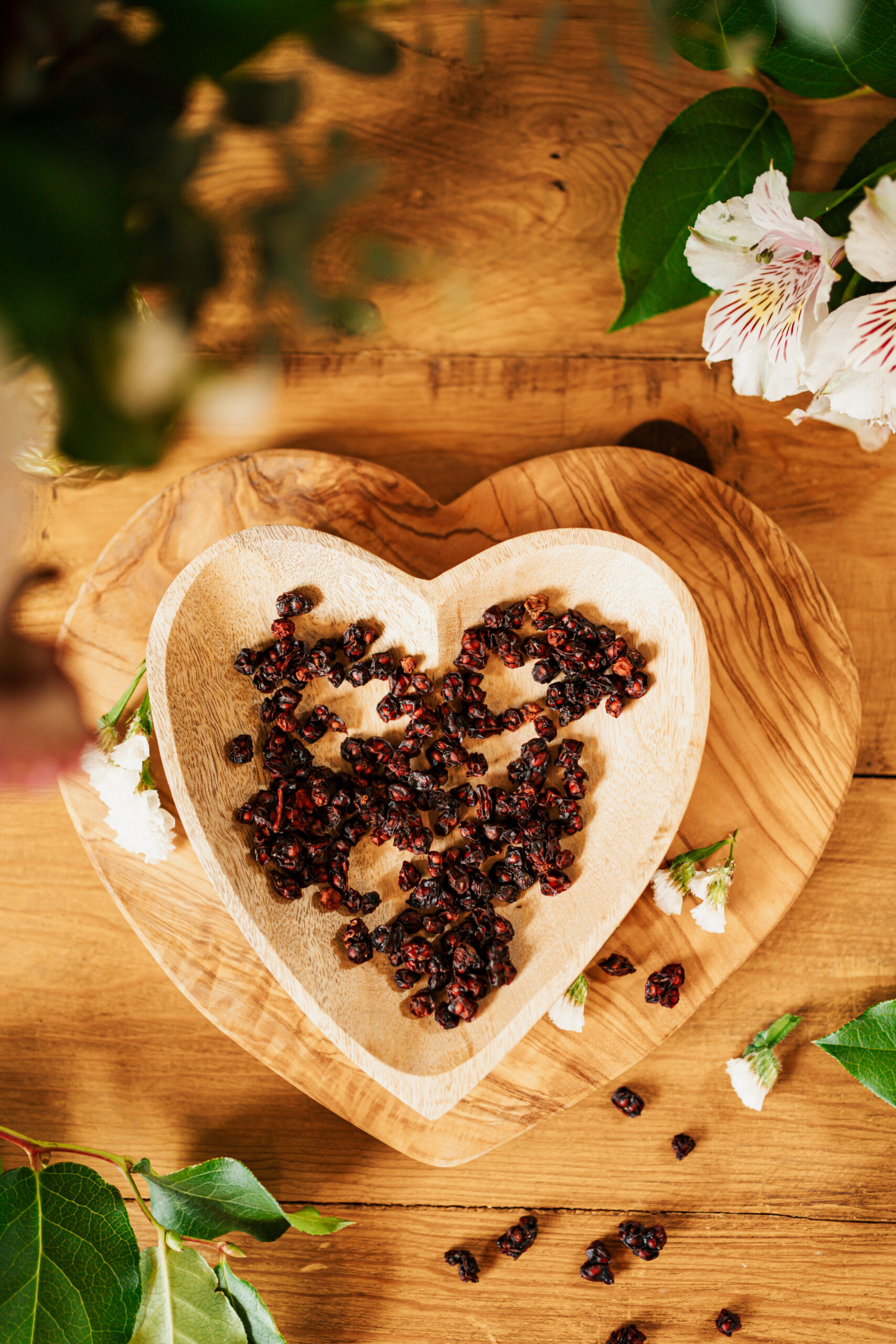
Low mood during the luteal phase can look different from person to person. It might show up as feelings of sadness, emptiness, or hopelessness that aren’t typical for you, resulting in the desire to stay under the covers all day. Schisandra is a warming herb that has a stimulating effect on the central nervous system while calming the stress response at the same time (Panossian & Wikman, 2010). When fatigue associated with low mood strikes, schisandra can provide a gentle energy boost. This herb is also considered a liver tonic that can support the elimination of reproductive and stress hormones. In this way, schisandra indirectly helps to ease shifts in mood during this time (Ehambarampillai & Wan, 2025).
For Mental Clarity: Rosemary (Salvia rosmarinus) Leaf
Has your brain ever felt foggy during your luteal phase? This can look like difficulty concentrating on details, having trouble finding the right words, being more forgetful or easily distracted, or simply feeling mentally sluggish. Several studies show that using rosemary–whether inhaling its essential oils or consuming its aromatic leaves–can support cognitive performance, recall, and working memory (Filiptsova et al., 2017; Moss & Oliver, 2012; Moss et al., 2017; Moss et al., 2018).
In Closing, Create a Deeper Connection With Your Inner Moon
Our bodies go through so many changes throughout the menstrual cycle. If you’re looking to feel more connected and learn how to take a holistic approach to your unique cycle needs, our 28-Day Menstrual Cycle Workshop: Herbs for Your Moon Phases invites you to slow down and tune into your body. As you explore the shifts that take place, you’ll discover supportive herbal and lifestyle practices that can be woven into your daily routine in a safe, supportive environment.
Give yourself 28 days to slow down, listen to your body, and provide it with the nourishment it needs.
REFERENCES
Winer, S.A., Rapkin, A.J. (2006). Premenstrual disorders: Prevalence, etiology and impact. Journal of Reproductive Medicine; 51(4 Suppl), 339-347. https://pubmed.ncbi.nlm.nih.gov/16734317/
Hoffmann, D. (2003). Medical herbalism: The science and practice of herbal medicine. Healing Arts Press.
Berger, Judith L. (1998). Herbal rituals. St. Martin’s Press.
Hantsoo, L., Rangaswamy, S., Voegtline, K., Salimgaraev, R., Zhaunova, L., & Payne, J.L. (2022). Premenstrual symptoms across the lifespan in an international sample: Data from a mobile application. Archives of Women’s Mental Health, 25(5), 903-910. https://doi.org/10.1007/s00737-022-01261-5
Panossian, A., & Wikman, G. (2010). Effects of adaptogens on the central nervous system and the molecular mechanisms associated with their stress—Protective activity. Pharmaceuticals, 3(1), 188-224. https://doi.org/10.3390/ph3010188
Ehambarampillai, D., & Wan, M.L.Y. (2025). A comprehensive review of Schisandra chinensis lignans: Pharmacokinetics, pharmacological mechanisms, and future prospects in disease prevention and treatment. Chinese Medicine, 20(1), Article 47. https://doi.org/10.1186/s13020-025-01096-z
Filiptsova, O.V., Gazzavi-Rogozina, L.V., Timoshyna, I.A., Naboka, O.I., Dyomina, Y.V., & Ochkur, A.V. (2017). The essential oil of rosemary and its effect on the human image and numerical short-term memory. Egyptian Journal of Basic and Applied Sciences, 4(2), 107-111. https://doi.org/10.1016/j.ejbas.2017.04.002
Moss, M., & Oliver, L. (2012). Plasma 1,8-cineole correlates with cognitive performance following exposure to rosemary essential oil aroma. Therapeutic Advances in Psychopharmacology, 2(3), 103-113. https://doi.org/10.1177/2045125312436573
Moss, M., Earl, V., Moss, L., & Heffernan, T. (2017). Any sense in classroom scents? Aroma of rosemary essential oil significantly improves cognition in young school children. Advances in Chemical Engineering and Science, 7(4), 450-463. https://doi.org/10.4236/aces.2017.74032
Moss, M., Smith, E., Milner, M., & McCready, J. (2018). Acute ingestion of rosemary water: Evidence of cognitive and cerebrovascular effects in healthy adults. Journal of Psychopharmacology, 32(12), 1319-1329. http://doi.org/10.1177/0269881118798339
About Post Author