Herbal Academy Student Feature: Rae Bellows (@wildoriginsbotanicals)
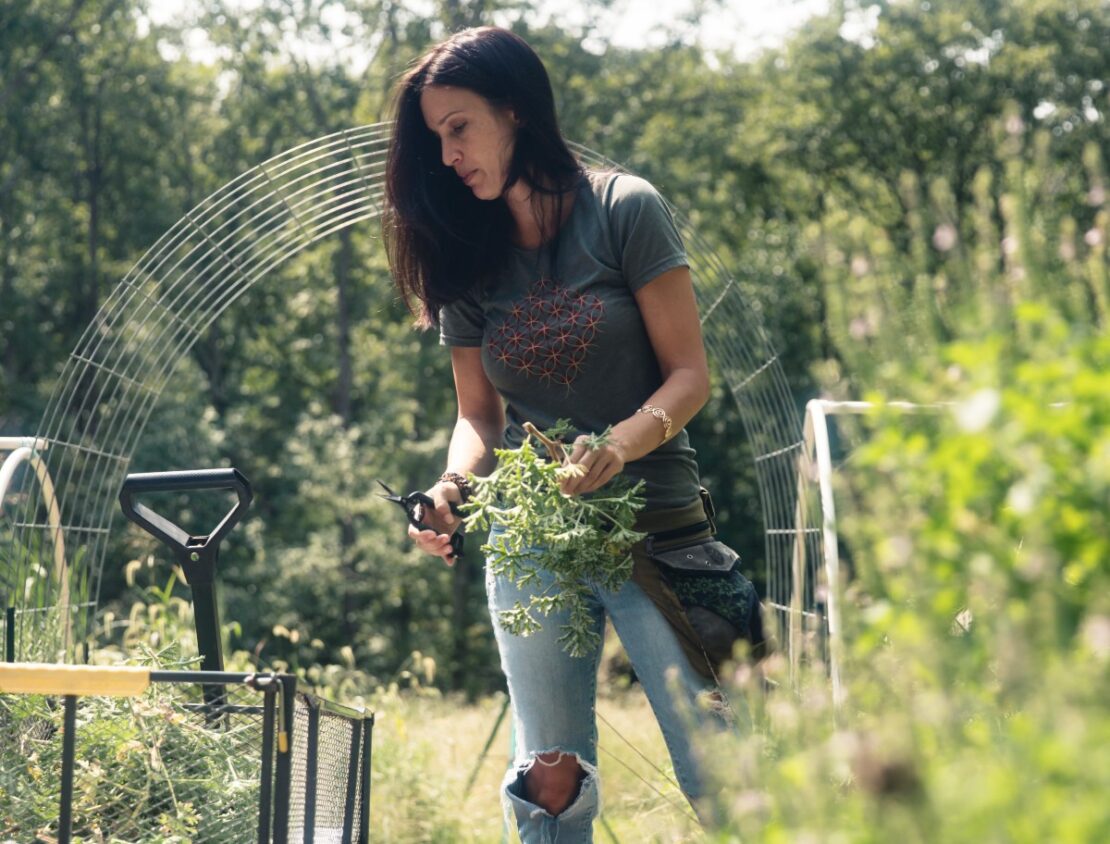
Rae Bellows (@wildoriginsbotanicals) is the owner of Wild Origins, which creates hydrosols and seed-to-bottle herbal products. Besides distillation, Rae spends her time in consulting and educational outreach as well. She is a student of the Introductory Herbal Course, the Botanical Skin Care Course, and the Intermediate Herbal Course. (Featured image by Cody Frayser Photography.)
HA: Please tell us a little bit about yourself and how you started your path into herbalism.

Rae Bellows: I grew curious about the effect plants have on the human body after a chance encounter while stationed in Germany. My story was previously shared by The Herbal Academy in their ebook Herbal Wisdom From Our Elders, but in short, I met a woman who survived a WWII prison camp and believed stinging nettles helped keep her alive. Before this, I had no background or even knowledge of herbalism. My life was focused on raising my kids and my career in real estate, but her story ignited something in me, and that sent me down an entirely different path. I needed to know more – I STILL need to know more!
HA: Why did you choose to pursue your herbal education with the Herbal Academy?
Rae Bellows: I actually started my education with another school, and I quickly realized I was in over my head as a new student with no knowledge of herbal terms or concepts. I needed a stepping stone, and I signed up for the Herbal Academy’s Introductory Herbal Course. Once I was in the course, I realized I liked how accessible Herbal Academy made learning about concepts and systems, and I signed up for more.
HA: Do you own an herbal business or brand?
Rae Bellows: Yes. Wild Origins began as a small farmers’ market stand where I sold hydrosols and herbal skincare made from plants grown on my Virginia farm. What started as a way to spend a summer selling products alongside my daughter quickly grew into nationwide sales and other opportunities.
Today, Wild Origins has evolved into a botanical distillation house focused on artisan hydrosols, seed-to-bottle herbal products, and plant-based formulation work. I’ve licensed many of my existing formulations to another company, and that has allowed me to shift more of my time and energy toward distillation, consulting, and educational outreach. As my work has evolved, hydrosol production and botanical distillation have continued to take center stage, and that portion of the business is now expanding into its own dedicated distillation company, Virelai. With new partnerships and collaborative projects in the works, I’m excited to continue expanding into new areas.
HA: How did your Herbal Academy courses help shape or improve your business?
Rae Bellows: Herbal Academy was my first introduction to botanical skincare and thinking about the skin through the lens of an herbalist. It also sparked my curiosity about hydrosols, and my daughter and I began experimenting with tiny stovetop distillations in our kitchen.
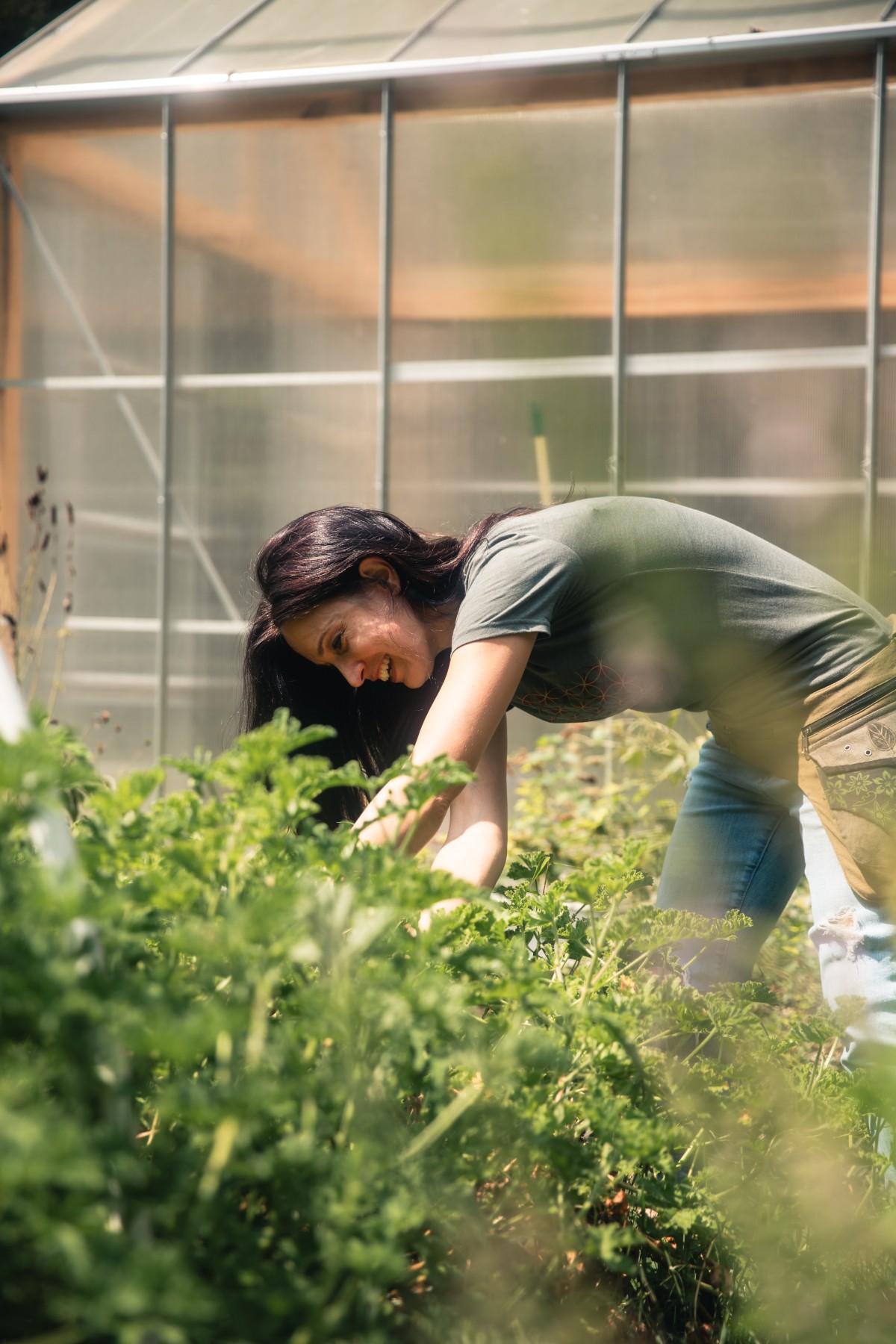
Photo credit: Cody Frayser Photography
HA: Did your Herbal Academy courses help you avoid any potential mistakes while launching your business?
Rae Bellows: Oh absolutely! Early on in my studies, I realized that herbalism and formulation require a deeper understanding than simply following recipes or trusting a single source of information. Herbal Academy introduced me to botanical skincare, but it also encouraged me to keep researching, cross-referencing information, and learning from additional educators. I have a deep love of chemistry and knew there was a lab component I wanted to focus on. That mindset became incredibly important as I moved deeper into botanical skincare and formulation work, where safety, stability, preservation, and understanding ingredient interactions all play a huge role in developing safe and effective products.
HA: Tell us, what’s next for you in your herbal journey?
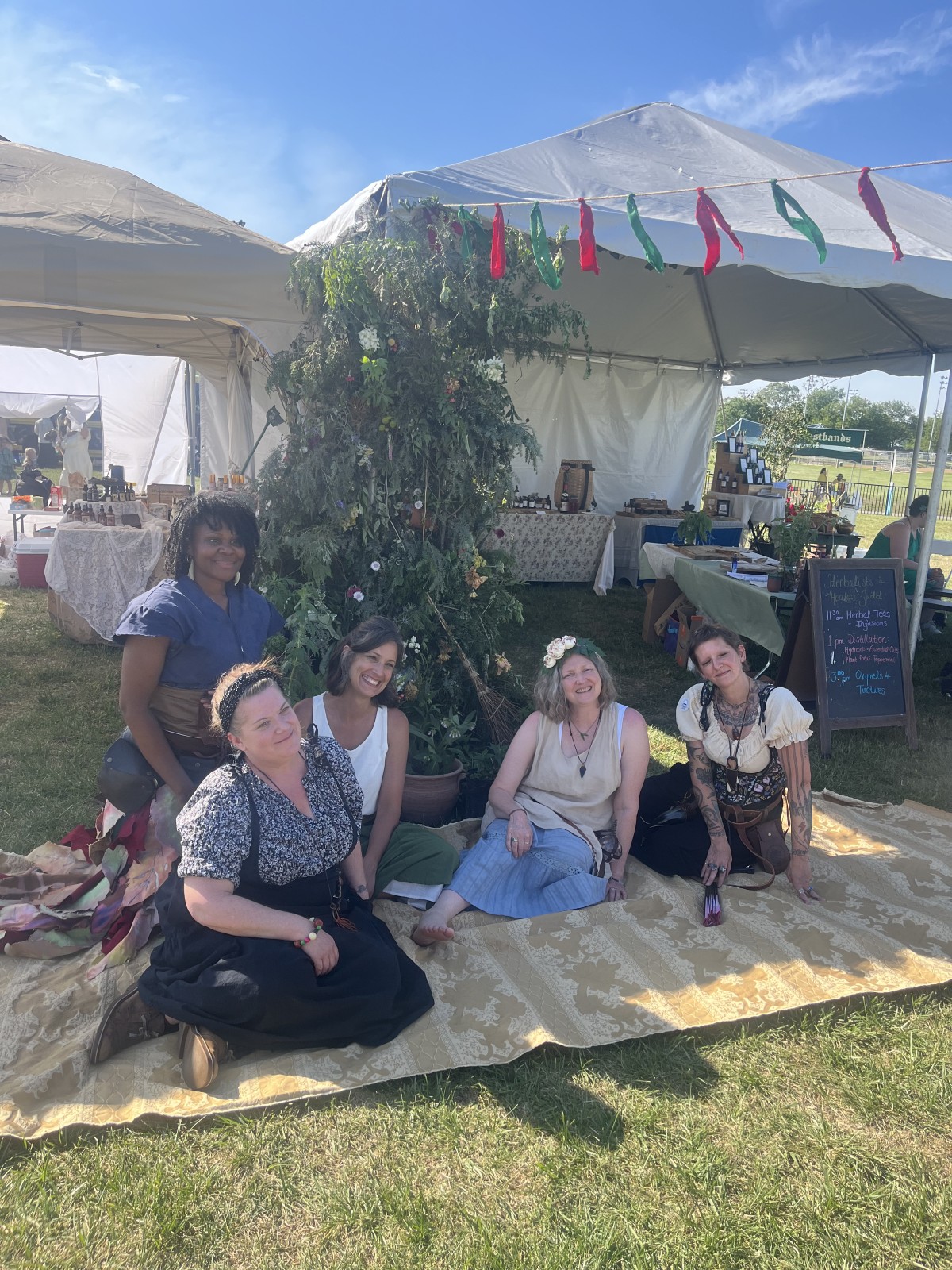
Rae Bellows: Right now, my herbal journey feels like it’s expanding in two directions at once: deeper into botanical distillation and further into community herbalism. While the distillation side of my work is actively growing, I’m also a founding member of the RVA Herbalist Alliance, a growing circle of herbalists, land stewards, and holistic practitioners committed to strengthening the relationship between people, plants, and community wellbeing. One of the things I value most about herbalism is that it’s rooted in both learning and relationship. Through plant walks, demonstrations, collaborative projects, and shared education, I’m excited to help create more spaces where people can reconnect with plants, local ecology, and each other.
HA: What were you looking for when you enrolled in your Herbal Academy course that you were not able to find elsewhere?
Rae Bellows: I was looking for introductory level foundational education. I had initially enrolled in a different herbal program, but I quickly realized I was in way over my head with unfamiliar terms and concepts. Herbal Academy helped bridge that gap by presenting information in a way that felt accessible without seeming oversimplified.
HA: If you were to recommend an Herbal Academy course to your best friend, what would you say?
Rae Bellows: I would tell them to start at the beginning and allow their interests to evolve naturally from there. When I first started studying herbalism, I thought I wanted to become a clinical herbalist, but I realized pretty quickly that that was not actually the path I wanted to follow. But having a strong introductory foundation makes it much easier to explore the different herbal career options with confidence. Herbalism is such a broad field, and the introductory courses help give students a place to begin discovering what truly resonates with them.
HA: Do you enjoy the Herbal Academy online community? If so, what specifically do you enjoy?
Rae Bellows: I do. I like that it’s not limited to only current students and that there is a very active admin and moderator presence. New students and experienced practitioners are able to chat easily to help answer questions, but the moderators ensure it remains a constructive place to talk.
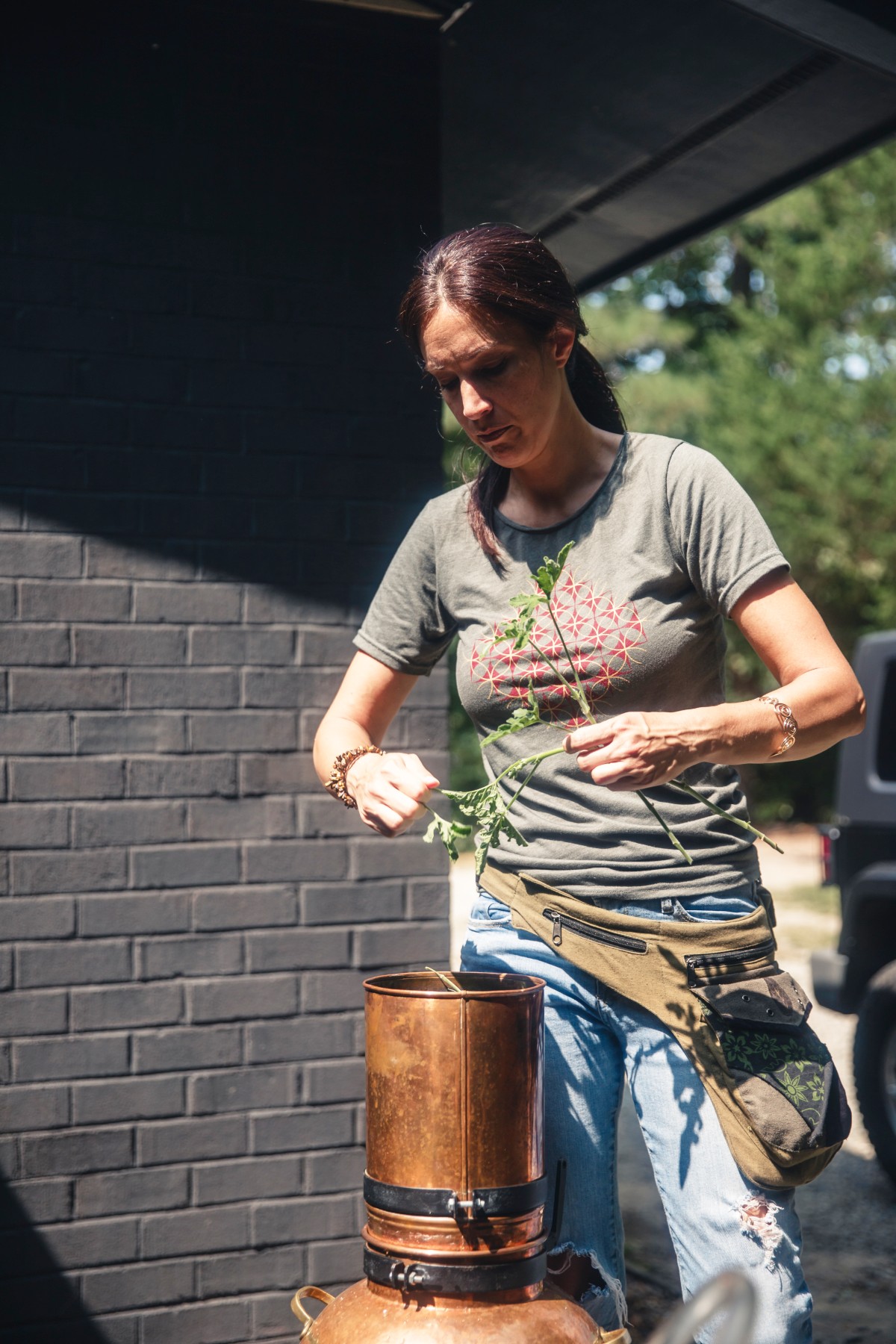
Photo credit: Cody Frayser Photography
HA: How has your herbal education deepened your connection with nature and the seasons?
Rae Bellows: My education led me into an entirely new career path. As a distiller working with fresh plants, I have to be fully engaged with the rhythms of nature and the seasons. I start germinating seeds in winter, preparing the soils in spring, and harvesting at the peak time of day and year based on the individual plant. Distillation has taught me to pay close attention to timing, weather, scent, growth patterns, and subtle seasonal shifts because I need to understand when the plants are truly ready.
HA: Is there a specific herb that you feel particularly drawn to? If so, why do you think that is OR what is it about that plant that fascinates you?
Rae Bellows: I am so fully in love with goldenrod. I can’t even fully explain why. I’ve tried to come up with an answer, but it’s just not there. But goldenrod… oh, that plant! I was vending at a plant show this spring and wanted to bring home one more variety for my garden, and somehow I ended up leaving with four new varieties instead. I love incorporating goldenrod into flour blends for baking, using the flowers as edible decorations, experimenting with sun printing using the stems, and of course working with it in tisanes and tinctures.
HA: What is your favorite recipe from the course(s) you’ve taken? Please be as specific as possible and share how/when you enjoy this recipe in your day-to-day life.
Rae Bellows: The Dandy Chamomile Bitters blend made with vodka. I’ve sampled a lot of bitters over the years, but this one is incredibly comforting as a pre-meal blend. I love that it doesn’t need to be mixed into anything complicated to be enjoyable or effective. It’s simple, grounding, and something I still genuinely enjoy using in everyday life.
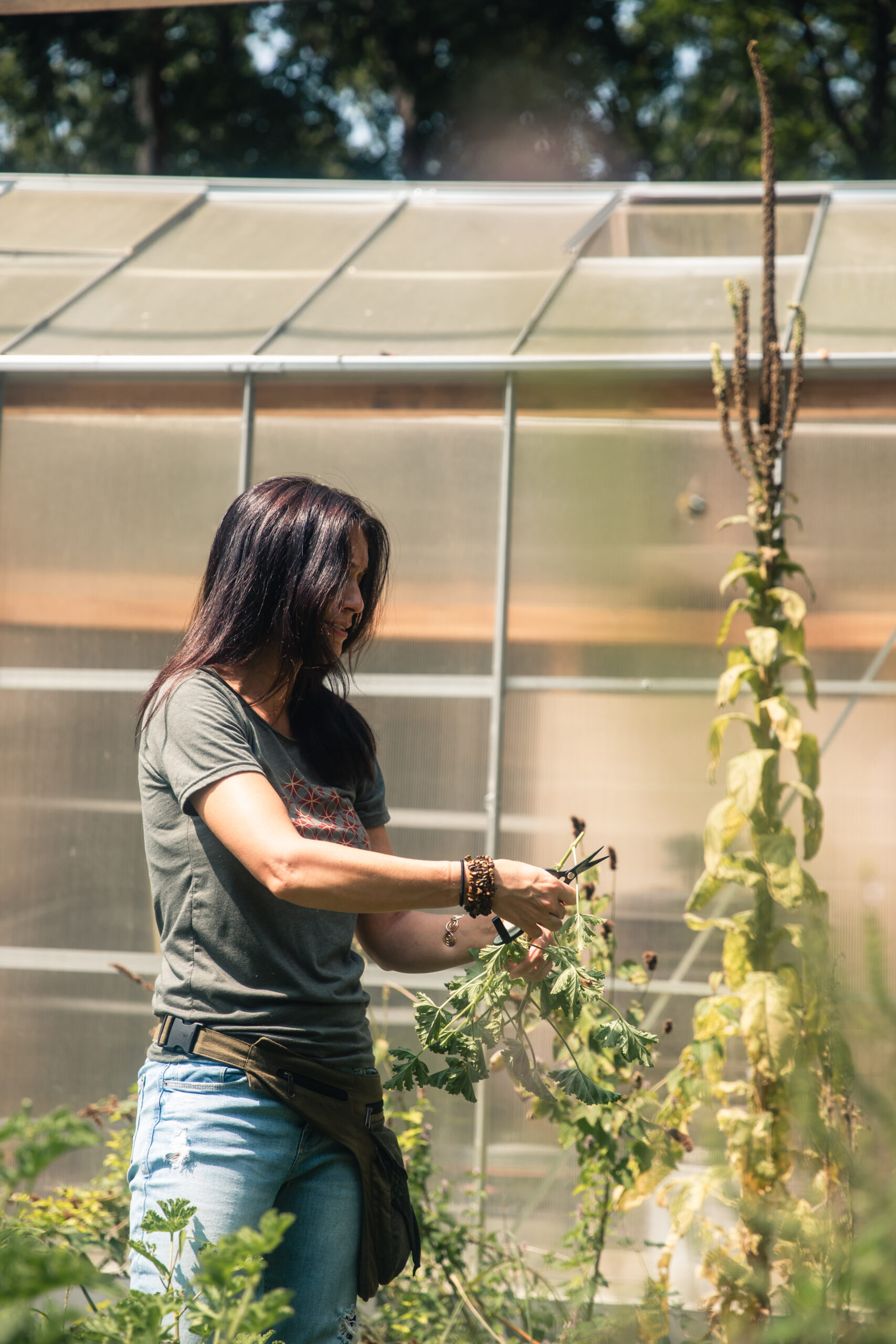
Photo credit: Cody Frayser Photography
HA: Has your herbalism experience encouraged you to learn and explore other related niches, like botanical crafts, gardening, natural dying, aromatherapy, etc?
Rae Bellows: My herbalism experience became all-encompassing very quickly. I ended up earning a degree in horticulture, creating a large herb garden and labyrinth space, joining my local Master Naturalist chapter, and exploring botanical art forms like cyanotype and herbal sun printing. Once I started learning about plants, it felt like every related path naturally opened into another.
HA: Did you feel that something in your life was missing before you discovered herbalism? If so, what do you think it was and how was herbalism helped?
Rae Bellows: I was missing connection with the plant kingdom.
Before herbalism, the plants were green things that I could occasionally name correctly. Now, I feel like I have real relationships with members of that kingdom, and I can’t imagine how empty my life would feel without that connection.
HA: Do you enjoy sharing your herbal knowledge with others in your life via recipes, products, photography, blog posts, community workshops, etc.?
Rae Bellows: I do. Social media has created such an accessible way to share herbal knowledge, inspiration, recipes, products, and plant experiences with other people. I wish I had more time to engage there consistently, because some of my favorite moments come from hearing that something I shared inspired someone else to create, grow, or experiment with plants themselves. That kind of connection and shared excitement fills my heart so much.
HA: If you could provide any tip or encouragement to those just starting their herbal studies, what would it be?
Rae Bellows: Give yourself grace to allow both the path you take and the speed at which you walk it to unfold naturally. When I first began studying, I thought I already knew exactly where I was headed and I wanted to get there fast, but many of the most meaningful parts of my journey were things I never could have predicted in the beginning. Herbalism is incredibly broad, and sometimes interests evolve slowly over time through experimentation, curiosity, and lived experience. There’s no single “correct” way to become an herbalist.
HA: Are there any elements of your herbal education where you’re still struggling to find trustworthy, well-researched information?
Rae Bellows: In botanical skincare, I still think there’s a significant gap between traditional folk herbalism and modern cosmetic formulation science. On one side, there are highly technical, lab-created ingredient systems, and on the other are folk makers relying entirely on traditional methods and anecdotal knowledge. I’m deeply interested in helping bridge that space more thoughtfully because I believe both worlds have valuable knowledge to offer. Finding well-researched information that respectfully integrates traditional herbalism with modern formulation science is still something I continue to search for.
Read past student interviews with:
Ashley Ruiz (@herbal.ash) – Herbal product maker for stress management, hormone support, energy, mental clarity; student of the Clinical Herbalist Path Package
Haille Olimb (@theherbalistsassistant) – Herbalist, business owner; graduate of the Clinical Herbalist Path Package
Amber Benge (@gracewalkfarm) – Gardener, homesteader, and graduate of The Foraging Course
Grace Jones (@gunkinthewoods) – Maker of herbal products, director of neighborhood kids garden club, and graduate of the Advanced Herbal Course.
Natalya King (@bodylovebytal) – Maker of herbal skincare products and graduate of Tincture Making 101 Course
Jess Bergeron (@jkb.journal) – Home herbalist and graduate of Mastering Herbal Formulation Course
Dave Achula (@achula_) – Invites individuals to explore the healing power of nature, directly in nature; graduate of Intermediate Herbal Course
Dagny Kream (@thecottagepeach) – Slow-living inspiration: recipes, gardening, seasonal crafts, traditional skills, and more; graduate of the Botanical Skin Care Course
About Post Author