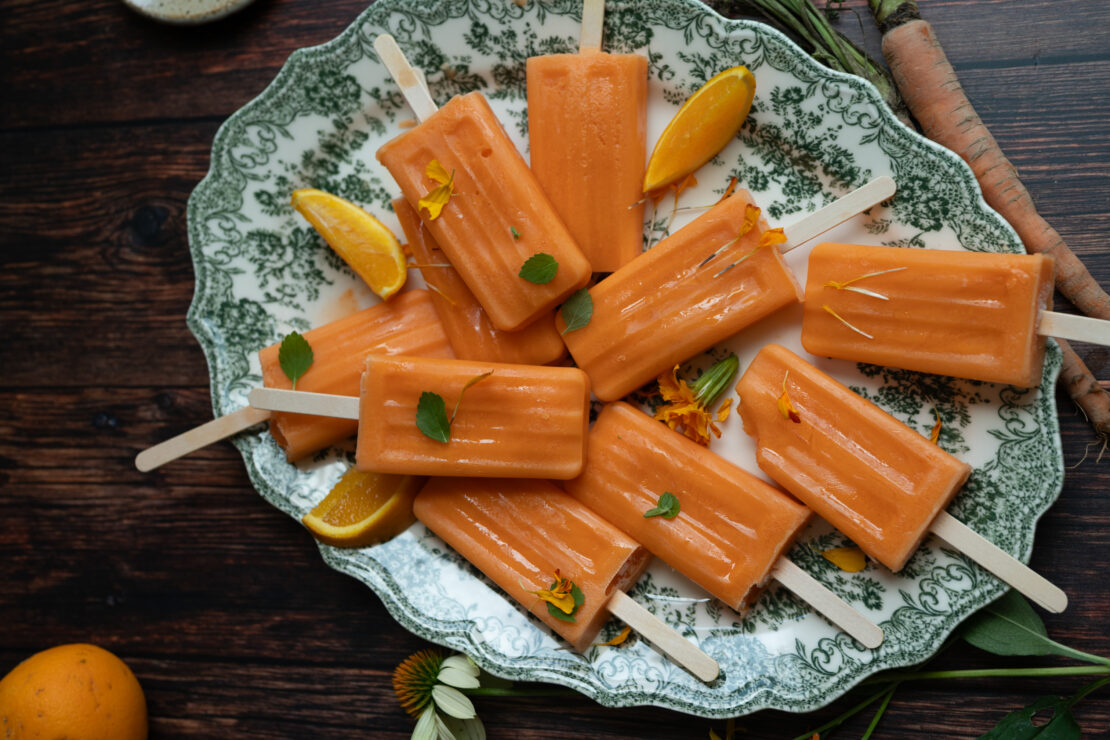
Vitamin C Carrot Calendula Orange Popsicles Recipe
Made with brewed calendula tea, fresh carrot juice, and fresh-squeezed orange juice, these Vitamin C Carrot Calendula Orange Popsicles are vibrant and nourishing. The vitamin C content in the orange juice, along with carotenoids in carrot juice and calendula blossoms, makes these popsicles not only beautiful to behold but also supportive of healthy skin, eyes, and immune system function. Let’s take a peek inside these tasty, refreshing, and sunny beauties to better understand what makes Vitamin C Carrot Calendula Orange Popsicles the perfect summertime treat.


The Nourishing Ingredients
Calendula (Calendula officinalis) Flower
Calendula flowers bloom from spring through fall. Their cheerful golden blossoms open with sunrise and close with sunset. It is for this reason, perhaps along with their sunny hue, that 17th-century herbalist Nicholas Culpepper (1653/1850) referred to them as “an herb of the sun” (p. 114).
When used externally, calendula flowers are a go-to vulnerary herb for soothing irritated skin conditions. Calendula salve or cream can be a saving grace for diaper rash, mild burns such as sunburns, and allergic skin reactions. It is generally gentle enough for sensitive skin, even that of babies (Groves, 2016). When taken internally, calendula can soothe the tissues of the gut. And, its antioxidant benefits shine. These lovely sunny flowers are rich in carotenoids, which support cardiovascular, eye, and skin health by functioning as powerful antioxidants. Calendula has a cooling energy and also promotes diaphoresis (Tierra, 1988), making it a helpful hot-weather herb.
Carrots
Some herbal traditions teach that carrots have a neutral energy, while others consider them slightly warming (Lad & Lad, 1994; Pitchford, 2002). But across herbal traditions and modern science, it is agreed that carrots are a rich source of beta-carotene, which the body converts to vitamin A. For this reason, carrots are incredibly helpful for skin and eye health. Both Chinese and Ayurvedic herbal traditions teach that carrots have a mild laxative effect (Lad & Lad, 1994; Pitchford, 2002). Ayurvedic doctor and renowned Ayurvedic teacher Vasant Lad (1994) teaches that a combination of fresh carrot and beet juice with a pinch of cumin is a blood-nourishing tonic.
In this recipe, carrots offer substance and a subtle, earthy sweetness, along with undeniable nutritional benefits.
Oranges
Oranges are well known as a rich source of vitamin C, which is important for immune system function, iron absorption, and collagen and muscle formation. Also, vitamin C functions as an antioxidant, which protects the skin from sun damage. Many skin creams and topical products formulated to help the skin resist the ill effects of overexposure to the sun contain vitamin C, and vitamin C helps your skin from the inside out by boosting collagen production and destroying free radicals.
Fresh orange juice in this recipe adds sweetness, tartness, and a hearty boost of vitamin C.
Now that you are convinced as to the health benefits of these home-brewed pops, let’s walk you through how to make them. It’s easier than you may think!
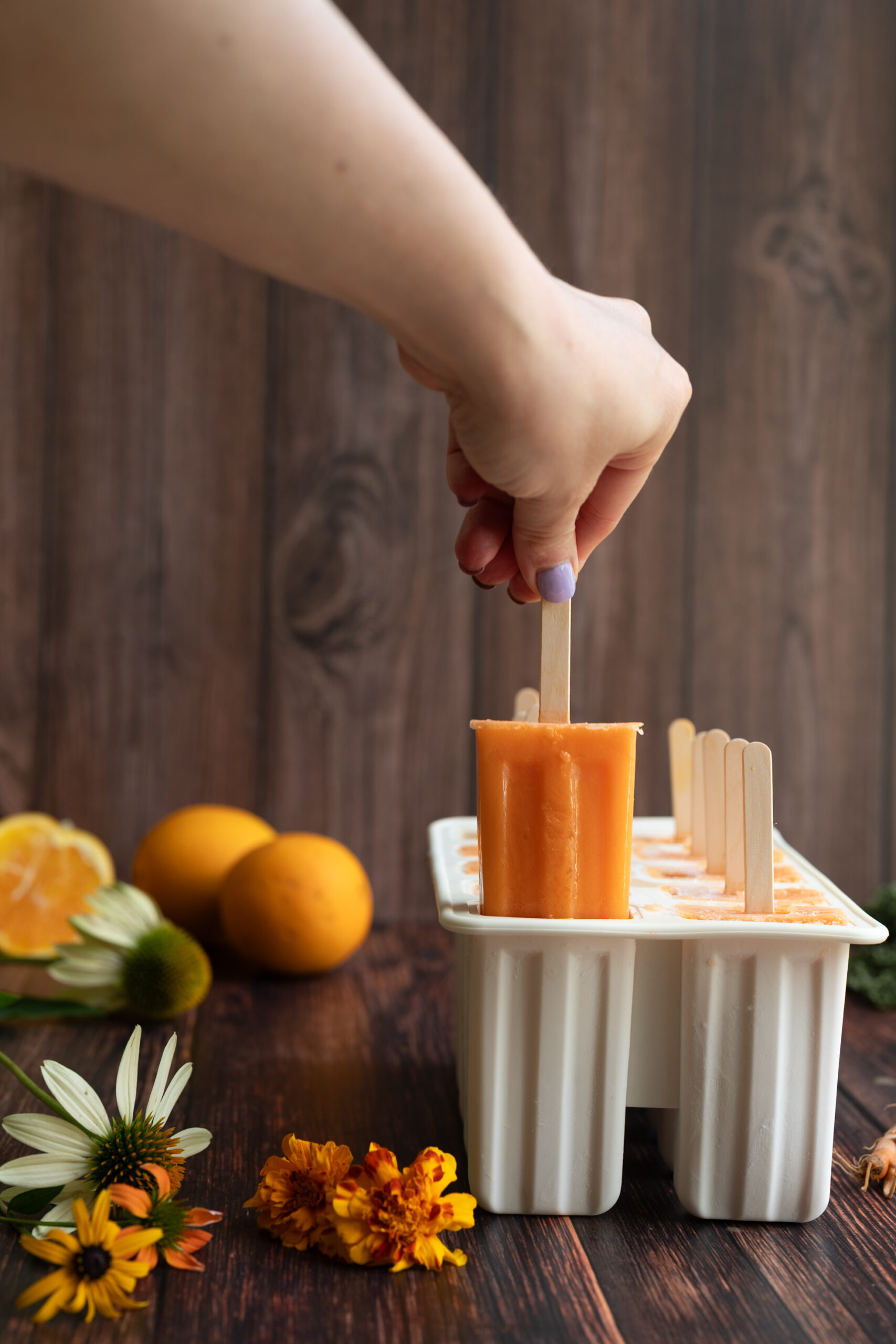
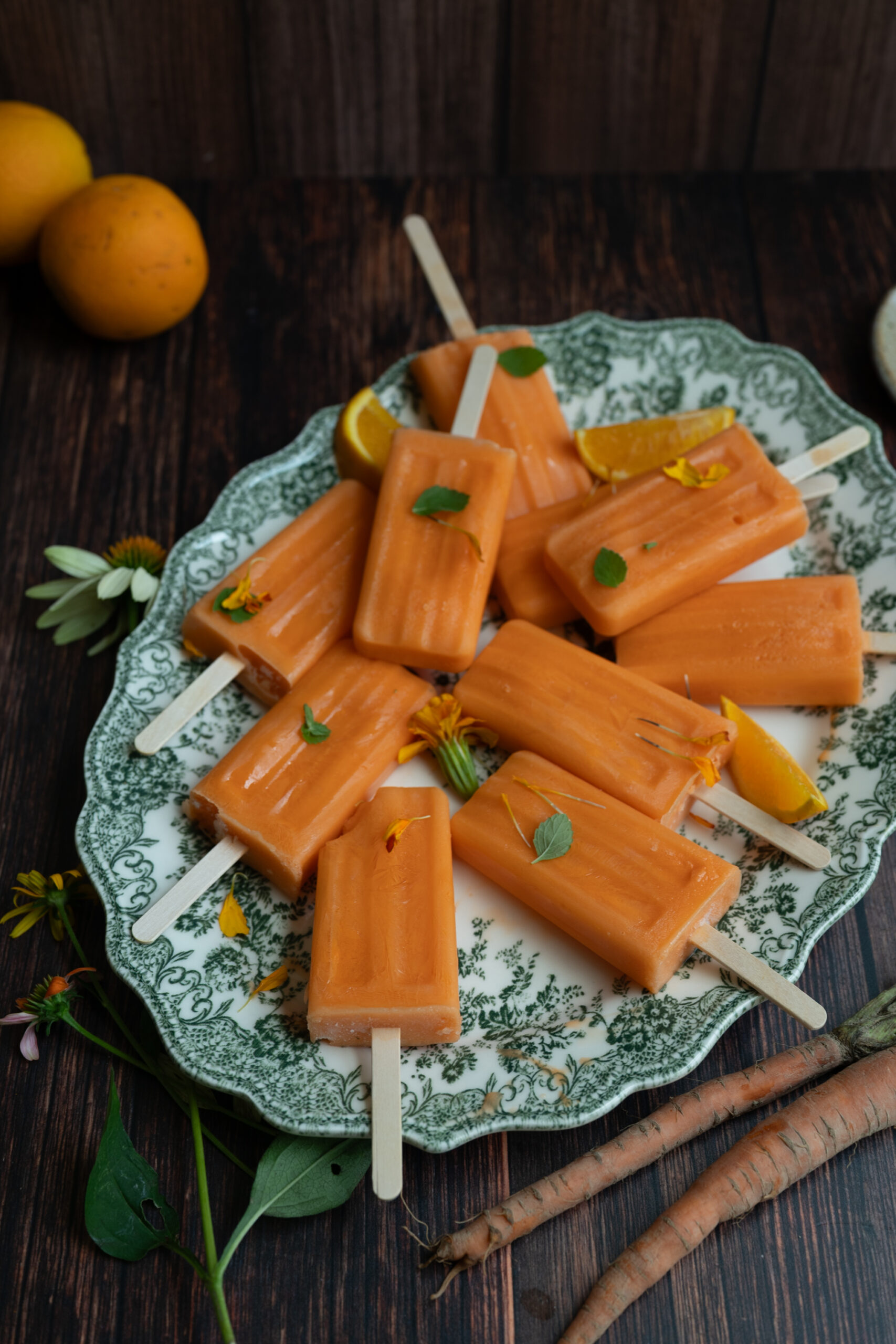
Vitamin C Carrot Calendula Orange Popsicles
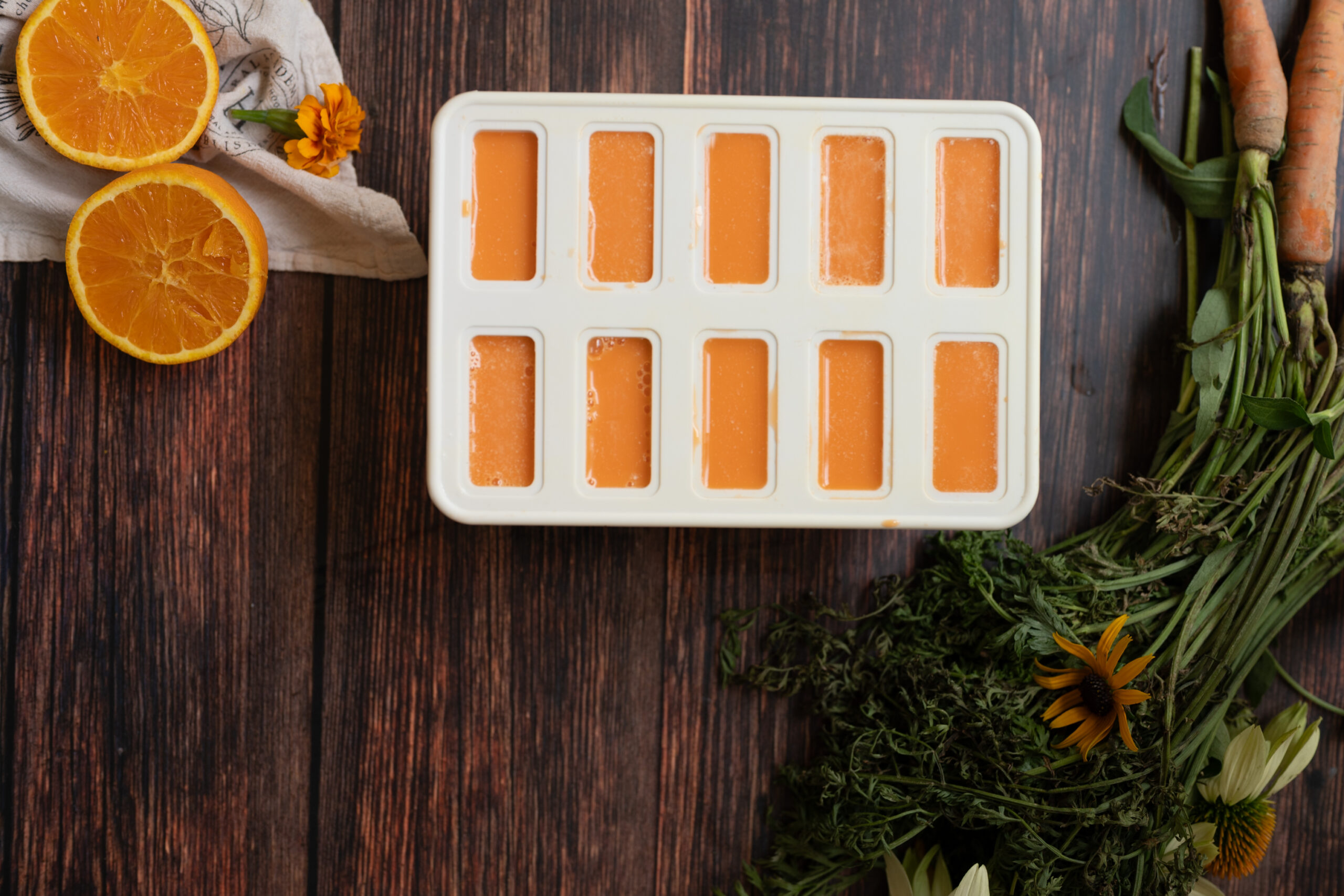
Full of beneficial ingredients and cheerful in appearance, these refreshing, sunny popsicles are the perfect wholesome treat to pull anyone out of a hot weather malaise. This recipe yields approximately 2 ½ cups of liquid, making 8-10 popsicles, depending on your mold size.
1 cup brewed calendula (Calendula officinalis) flower tea Brew calendula tea. Steep 1 cup of hot water with 1 tablespoon dried calendula petals (or 1-2 calendula tea bags) for 10 minutes. Strain and add honey if desired. Set aside.
1 cup carrot juice (fresh pressed or store-bought)
½ cup fresh squeezed orange juice (about 3-4 medium oranges, depending on juiciness)
1 tablespoon honey (optional)
In Closing,
Summer is all about fun in the sun—time spent outdoors is nourishing to both body and soul. While there are important health benefits to a limited amount of daily sun exposure (read Lifestyle and Nutrition Tips for a Vitamin D Deficiency), it is well known that too much exposure to ultraviolet (UV) rays takes its toll on skin health. Along with proper sun protection and carotenoids from carrots and calendula, as well as vitamin C in orange juice, these popsicles can be part of your summer skin health routine, offering nutrients that your skin (and immune system!) need to stay healthy throughout the hot, sunny months. Keep a tray of beautiful golden Vitamin C Carrot Calendula Orange Popsicles in your freezer and enjoy any time you need a cool treat.
REFERENCES
Culpeper, N. (1850). The complete herbal. Thomas Kelly. (Original work published 1653).http://www.gutenberg.org/files/49513/49513-h/49513-h.htm
Groves, M.N. (2016). Body into balance: An herbal guide to holistic self-care. Storey Publishing.
Lad, V., & Lad, U. (1994). Ayurvedic cooking for self-healing (2nd ed.). The Ayurvedic Press.
Pitchford, P. (2002). Healing with whole foods: Asian traditions and modern nutrition (3rd ed.). North Atlantic Books.
Tierra, M. (1988). Planetary herbology. Lotus Press.
About Post Author