Herbal Cosmetic Ingredients: Coconut Oil
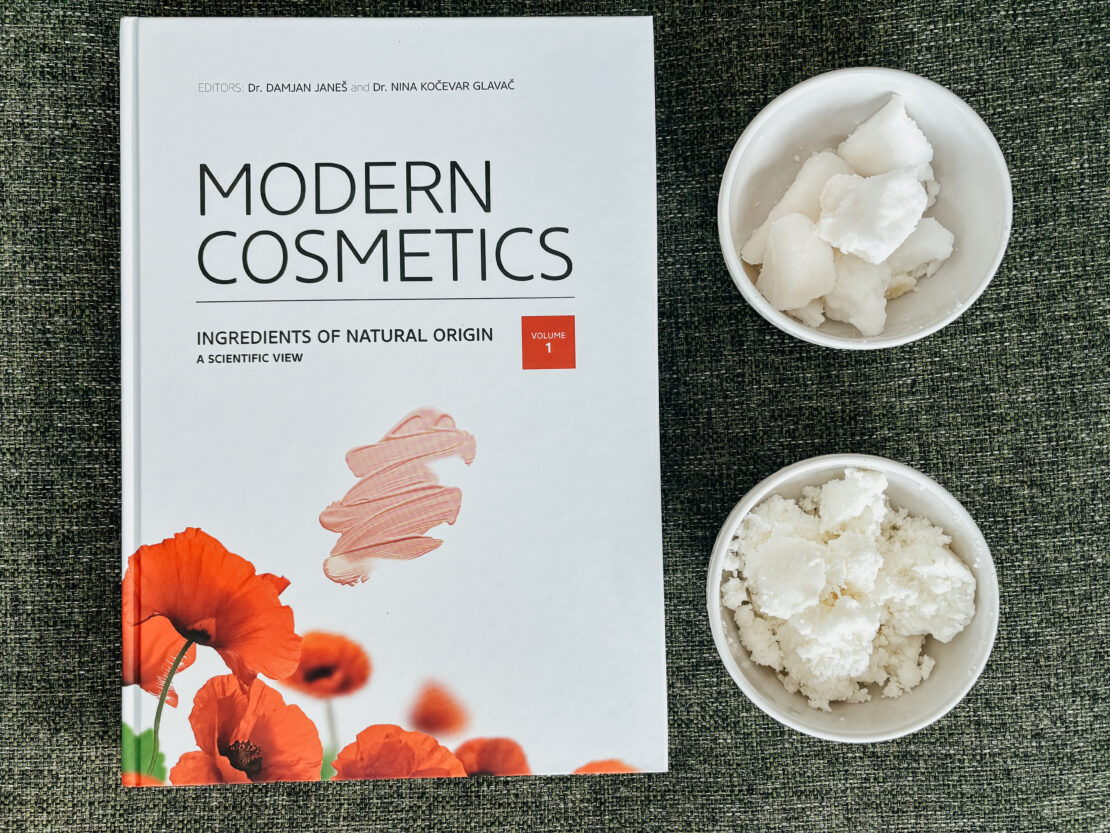
In this exclusive video presentation and written excerpt from her book Modern Cosmetics – Ingredients of Natural Origin: A Scientific View, Dr. Nina Kočevar Glavač offers an inside look at plant butters and oils, revealing the science behind botanical skincare. An author, botanical researcher, and Associate Professor at the University of Ljubljana in Slovenia, Dr. Nina is internationally recognized for her work with botanical ingredients. With an engaging approach to phytochemistry, she brings a fresh herbal perspective to skincare science, touting recognizable ingredients like uses of coconut oil and shea butter that are both effective and safe.
Plant-based skincare unlocks a vast amount of options for ingredients and formulation possibilities. In this video, Nina unpacks the molecular intricacies hidden behind the plant oils and butters that are key to so many natural cosmetic formulas, while also busting popular skincare myths surrounding these ingredients. Going beyond their simplicity, Nina explores a sophisticated interplay of constituents that makes for powerful plant-based preparations.
Get acquainted with the basics of coconut oil in the book excerpt below, and then join Nina for an engaging presentation on coconut oil, shea butter, and the science behind these ubiquitous natural ingredients. Expanding one’s grasp of plant chemistry enhances both appreciation and practical skill in working with botanicals. You may find yourself reading the ingredients on a bottle of skin serum or hydrating shampoo with an entirely new understanding of its formulation!
Head on over to The Herbarium to find the whole excerpt from Nina’s book and the exclusive, full length video in which she further explores the nuanced phytochemical principles which make plant butters and oils such versatile cosmetic ingredients.
The following is excerpted from Modern Cosmetics – Ingredients of Natural Origin: A Scientific View by Eds. Dr. Nina Kočevar Glavač and Dr. Damjan Janeš, published by Sirimo dobro besedo, d.o.o. Copyright © 2021 by Dr. Nina Kočevar Glavač and Dr. Damjan Janeš.
Vegetable butters and oils have become one of the main interests of natural cosmetics, from the perspective of manufacturers and users. The reasons are numerous: they can be found extensively throughout the plant world, their medicinal and cosmetic use is based on experience of thousands of years and, last but not least, they are a valuable source of biologically active substances. Moreover, the trend of returning to nature has contributed significantly and added an exotic touch to the popularity of vegetable butters and oils.
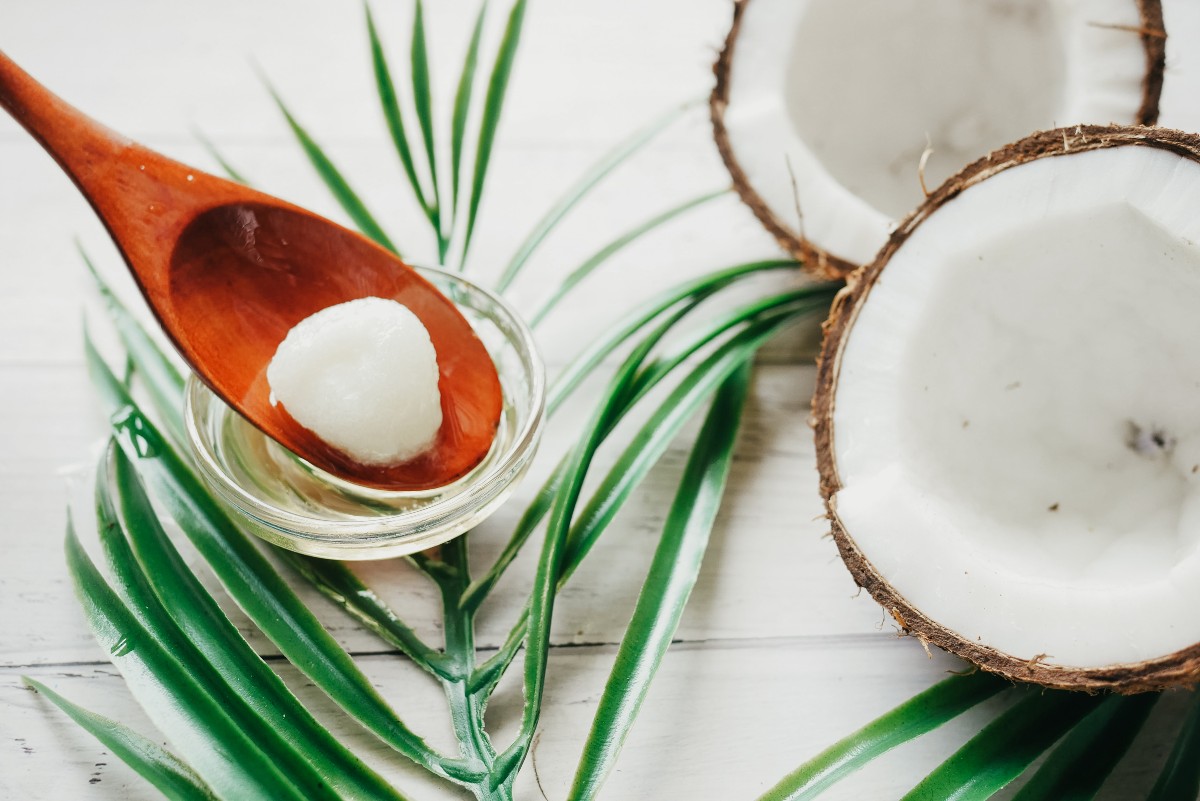
COCONUT • coconut oil
Scientific name: Cocos nucifera L.
Family: Arecaceae (palm family)
Plant part: seed
INCI: Cocos Nucifera Oil, CosIng: emollient, hair conditioning, masking, skin conditioning, solvent
Coconut butter can also be found in the CosIng database (INCI: Cocos Nucifera Seed Butter, CosIng: skin conditioning). It is a refined and partially hydrogenated coconut oil.
Description
Coconut is a palm tree that grows to a height of 20 to 40 m. It is best-known for its unusual fi-
brous fruit, which we simply call coconut. The term nut, however, is botanically incorrect. Another interesting feature are the three germination pores visible at one end of the endocarp. These are so-called coconut eyes. The young sprouting coconut palm starts to grow through the functional germination pore. Coconut seed is loaded with a nutritional tissue (i.e. endosperm), which is first liquid (coconut water) and then turns into a solid white mass during the ripening process. The dried solid white mass is called copra, and used in the production of coconut milk and coconut oil. Coconut originates from the tropical coastal regions of Indonesia, Thailand and Vietnam, where it was discovered in the 16th century by Portuguese and Spanish sailors. It is also widely cultivated today in Africa and America.
Botanical characteristics: leaves pinnately compound, 4 to 5 m long, 1 to 1.5 m wide, leaflets 200 to 250; inflorescence light yellow, male flowers numerous, female flowers larger and only few; fruits botanically termed drupes, initially green, but become dark brown when ripe, exocarp thin, mesocarp fibrous, endocarp hard, with a large seed.
Composition and characteristics
- Fatty acid
- Caprylic acid (C8 : 0) 7%
- Capric acid (C10 : 0) 6%
- Lauric acid (C12 : 0) 48%
- Myristic acid (C14 : 0) 18%
- Palmitic acid (C16 : 0) 9%
- Stearic acid (C18 : 0) 3%
- Oleic acid (C18 : 1, ω-9) 6%
- Linoleic acid (C18 : 2, ω-6) 2%
- Phytosterols 470 to 2,300 mg/kg (mainly β-sitosterol)
- Vitamin E 20 mg/kg
Coconut seeds contain approximately 30% oil. Coconut oil is a unique vegetable oil that contains a wide range of fatty acids, i.e. C8 to C18, of which saturated fatty acids represent more than 90%. It is only surpassed by kokum butter in this respect. Another characteristic is its predominant proportion of lauric acid. Such a triglyceride composition results in a solid consistency at room temperature. The melting temperature is approximately 25°C. Coconut oil is very stable against oxidation. It is white or light yellow, with a typical odour of coconut.
In terms of triglyceride composition, very good substitutes for coconut oil are found in babassu and palm seed oil. The primary but minor difference in their composition is the smaller content of oleic acid in coconut oil.
Mechanism of action and use
Coconut oil has traditionally been used for its cosmetic and medicinal values, mainly as an emollient to improve skin hydration and to strengthen the hair. The same effects have been proven by scientific research. Two clinical studies on patients with atopic dermatitis and xerosis have shown significant improvement in disease symptoms, i.e. dryness, roughness, scaling and itching. Skin hydration and surface lipid levels were increased. The antimicrobial properties of coconut oil against Staphylococcus aureus and a reduction of its colonisation in the atopic skin have also been confirmed. In terms of its hair care effects, coconut oil has been found to prevent the loss of hair proteins in both undamaged and damaged (bleached, boiling water treated and UV-treated) hair of different types, i.e. straight, curly, wavy and permed hair. It is assumed that beneficial effects are delivered by the high affinity of lauric acid to hair keratin. Lauric acid is capable of penetrating the hair shaft due to its small molecular mass and the linear structure of the fatty acid chain, which also makes the hair more resistant to mechanical damage, e.g. combing. Due to its aforementioned skin and hair care effects, coconut oil may be useful in the care of dry, sensitive and acne-prone skin, and in the care of thin and damaged hair.
In Polynesia, a fragrant Monoï oil is traditionally made by the maceration of petals of Tahitian gardenias (Gardenia taitensis DC.), also known as Tiaré flowers, in coconut oil.
GENTLY for pampering the skin and hair
Following the traditional habits of Polynesian women, who are known for their smooth skin and thick, shiny hair, a regenerative skin and hair care night mask may deliver a magical softness.
Join Nina in the video below as she expands on the value and uses of plant butters and oils in botanical formulations, and how coconut oil and shea butter specifically benefit the skin.
SEE THE FULL LENGTH VIDEO IN THE HERBARIUM!
Interested in learning more about natural skincare, herbal formulation, and how to use coconut oil in concocting your own botanical blends? Members of The Herbarium can join professor and formulation consultant Dr. Nina Kočevar Glavač as she delves into these topics in more depth! You’ll find the this enlightening video in The Herbarium, along with the full excerpt of Modern Cosmetics – Ingredients of Natural Origin: A Scientific View including a shea butter monograph.
Interested but not yet a member of The Herbarium? Get access today with quarterly or annual membership!
The Herbarium is an ever-expanding, illuminating virtual collection of nearly 220 (and counting!) searchable monographs, 20+ unique intensive short courses on focused topics, and numerous informative articles, videos, ebooks, podcasts, and helpful downloadable resources. The Herbarium is crafted for herbalists to help you learn and grow in your herbalism journey!
Learn more and sign up for The Herbarium here.
Find Modern Cosmetics – Ingredients of Natural Origin: A Scientific View, by Dr. Nina Kočevar Glavač via Modern Cosmethics or Amazon.


Associate Professor Dr. Nina Kočevar Glavač, M. Pharm., works at the Department of Pharmaceutical Biology, Faculty of Pharmacy, University of Ljubljana, Slovenia. She studied pharmacy and then completed her doctorate in the area of biomedicine. At the Faculty, she gives lectures in the area of medicinal plants (pharmacognosy, phytotherapy, cosmetic ingredients of natural origin). She also educates members of different professional and herbal associations, and the general public about the therapeutic and safe use of medicinal plants, and cosmetic formulators about ingredients in natural cosmetics. Her research work involves the development of phytochemical methods for the analysis of natural compounds and evaluation of their biological activities. In recent years, the focus of her research is the study of essential oils, CO2 extracts, subcritical water extracts, and plant butters and oils as therapeutically and cosmetically active ingredients.
Connect with Nina at her website, https://moderncosmethics.com/
About Post Author