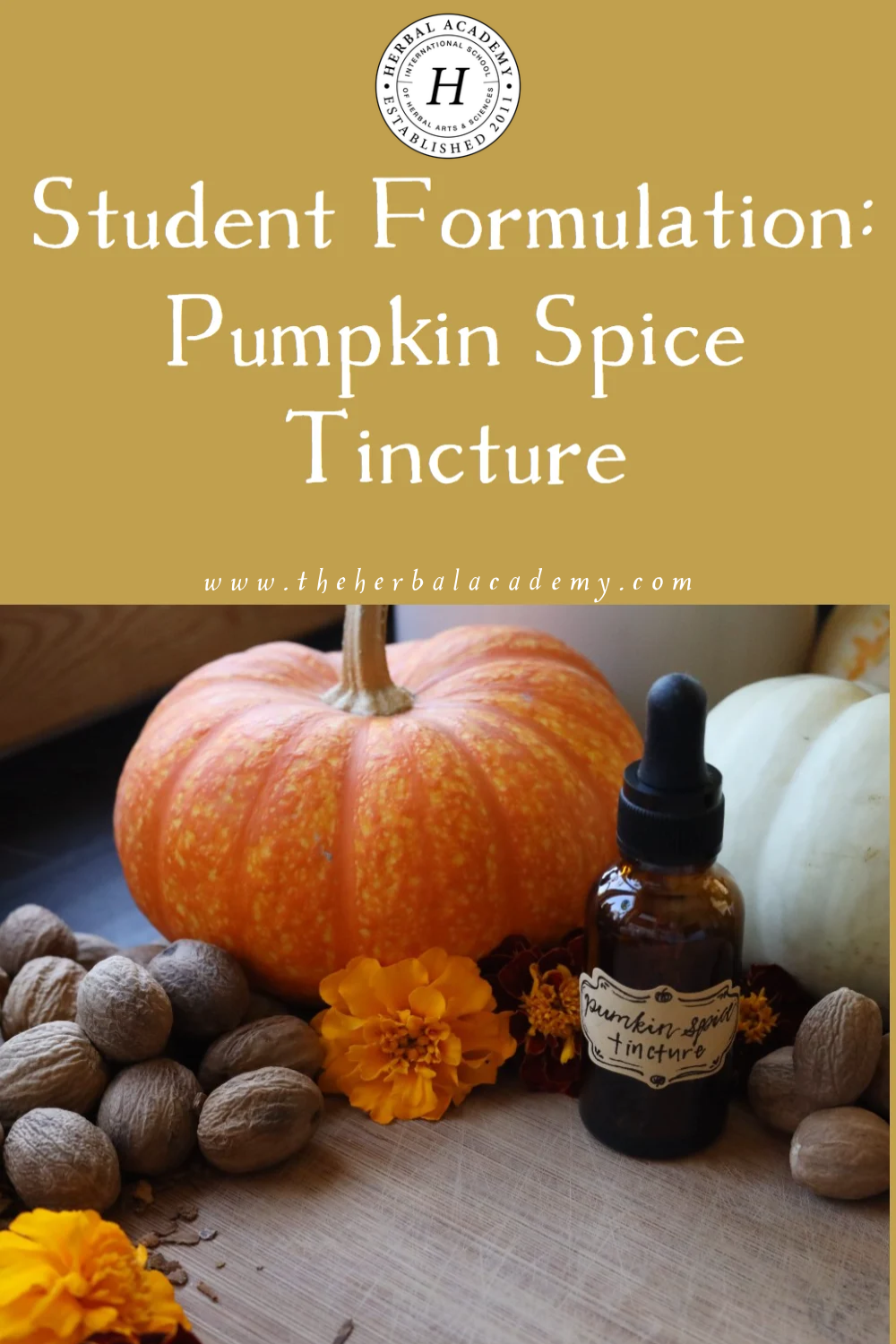
Student Formulation: Pumpkin Spice Tincture
This student formulation is submitted by Herbal Academy student Mike Crean
While the shift into autumn brings crisper air and falling leaves, cozy sweaters, and closed-toe shoes, it is also marked by a well-known flavor: pumpkin spice. And what better way to celebrate this seasonal tradition than with a herbalist’s twist?

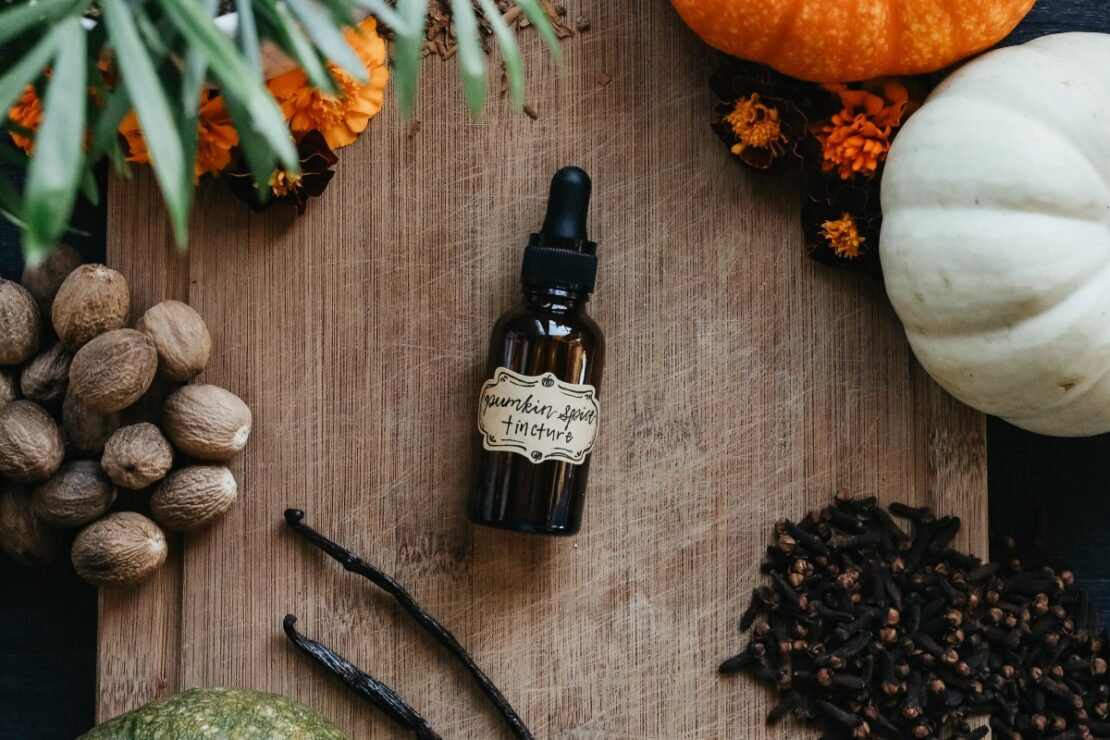
This pumpkin spice tincture is more of a culinary botanical extract than a traditional tincture, but its goodness draws on herbal wisdom. Cinnamon, clove, and nutmeg have long traditions of use as warming, aromatic digestive herbs. Vanilla brings its wonderful scent and flavor, and pumpkin contributes its own beneficial plant compounds. This recipe is all about preserving a little piece of the season and having some fun with herbalism.
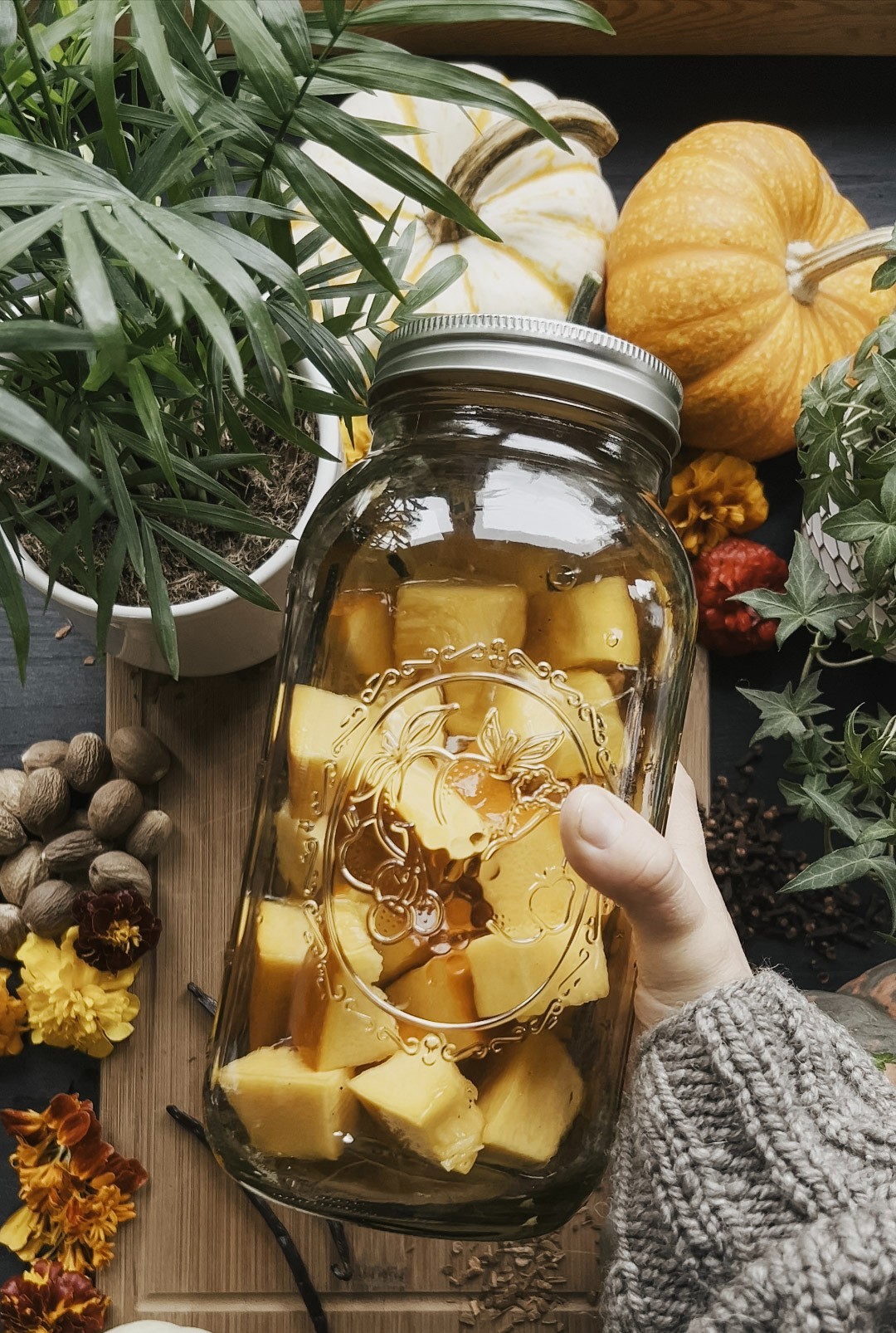
Pumpkin Spice Tincture: Featured Ingredients
Pumpkin (Cucurbita pepo)
A pumpkin bred for the kitchen is what makes this recipe work. It may seem tempting to use every part of your carving pumpkins, but they tend to be stringy, watery, less dense, and pretty bland in flavor. While you certainly can cook with them, you’ll probably be underwhelmed, and your creation will struggle to develop the rich pumpkin flavor we’re looking for. Try making this pumpkin spice tincture with Seminole, Dickinson, Cinnamon Girl, and Long Island Cheese varieties for best results.
Pumpkins are a nutrient-dense food that contains antioxidants, minerals like magnesium, potassium, zinc, and iron, along with high amounts of vitamins A, C, and E, perfect for replenishing the body in preparation for the colder months ahead.
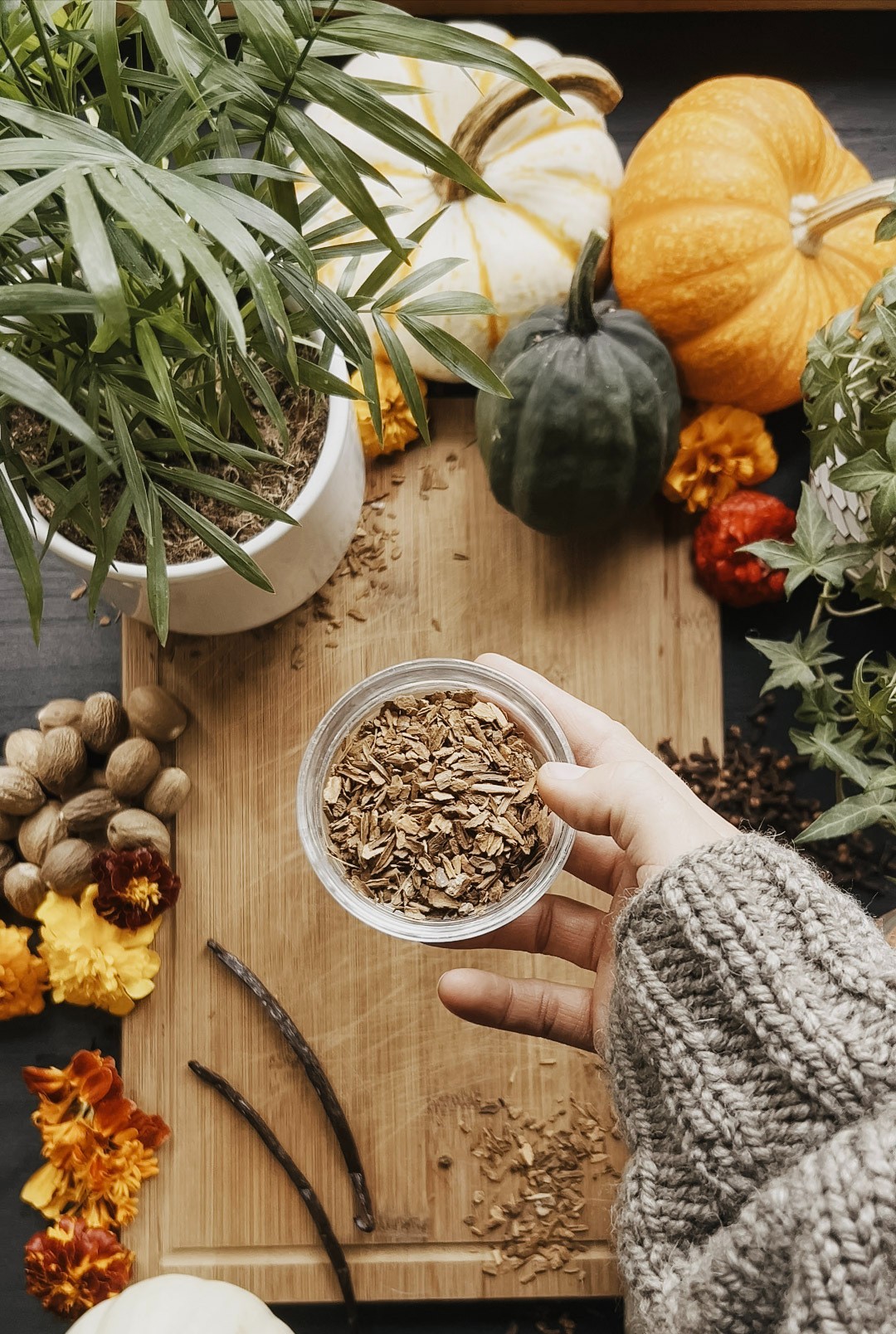
Warming Spices
Cinnamon (Cinnamomum burmannii) bark, clove (Syzygium aromaticum) bud, and nutmeg (Myristica fragrans) seed are deliciously warming additions to this pumpkin spice tincture recipe, inviting us to get cozy. These comforting spices share antimicrobial properties and are traditionally used to support digestion and circulation. Nutmeg is also an antispasmodic and nervine, helping the body relax.
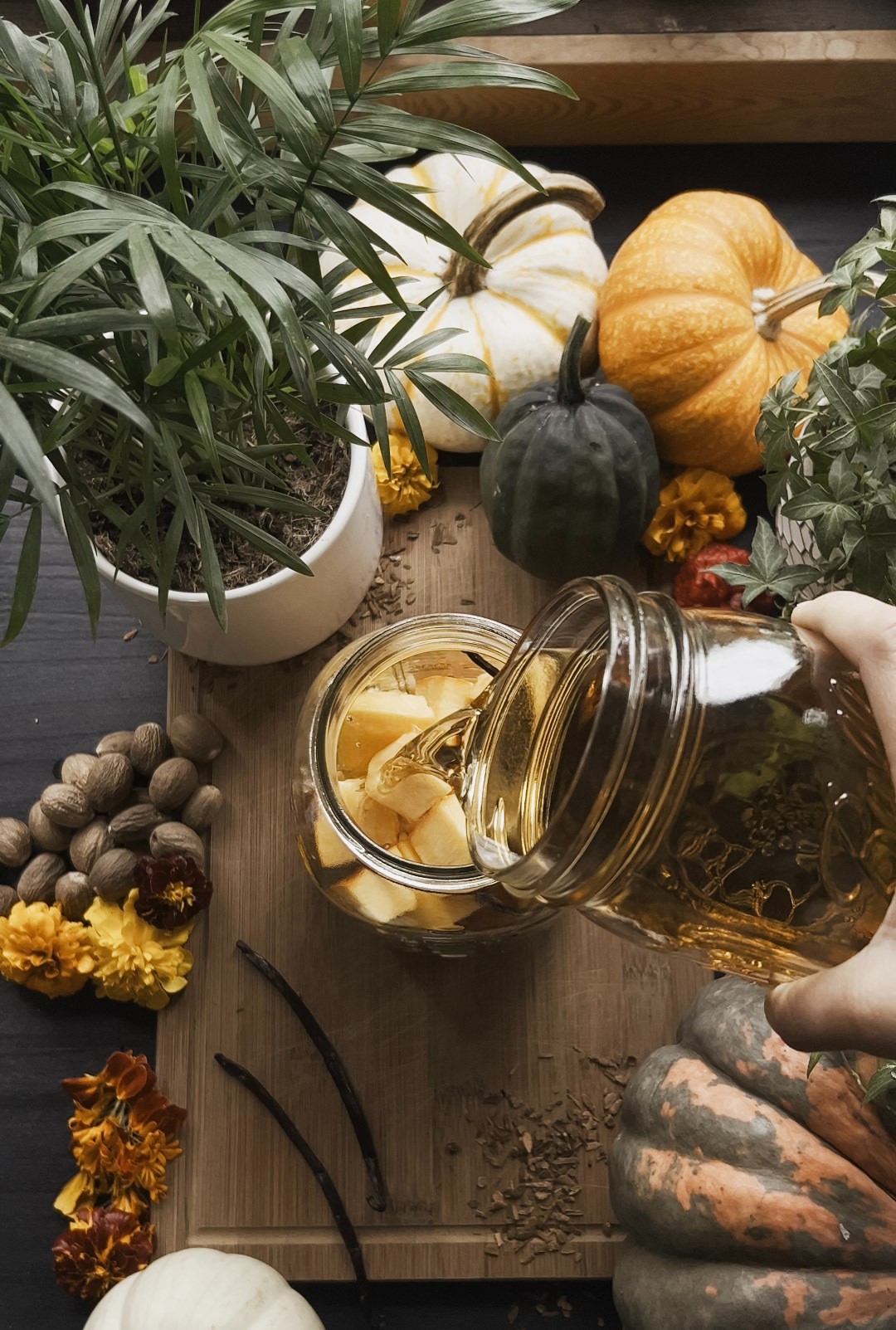
The Tincture-Making Process
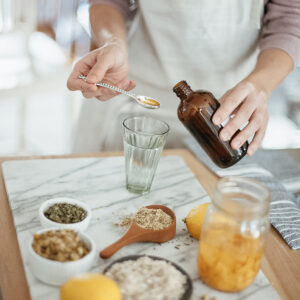
I make this a little differently by separating it into two extractions. Cinnamon and clove extract quickly and can easily overpower everything else. Separating them lets me control how much ends up in the finished extract. For the menstruum, I use rum rather than a neutral spirit because its subtle vanilla, oak, and warmth complement the pumpkin and baking spices. I start with a high-proof menstruum because fresh pumpkin contains a lot of water, causing the ABV to drop substantially during extraction. Aim for a finished pumpkin extraction around 40% ABV.
Pumpkin Spice Tincture Recipe
This flavorful combination is perfect for the fall season. Enjoy in lattes, chai, or any recipe where you might want to add some pumpkin spice. This recipe is formulated and shared by Herbal Academy student, Mike Crean. Yield: approximately 28 fl oz.
18 ounces 151-proof rum, Don Q, or similar Rum Menstruum:
Pumpkin Base:
Cinnamon and Clove Extract:
Blending the Pumpkin Spice Tincture:
2 fluid ounces 80-proof vodka
1 pound fresh raw pumpkin (Cucurbita pepo), cut into ½–¾-inch chunks
1 whole vanilla (Vanilla planifolia) bean, split lengthwise
1 whole nutmeg (Myristica fragrans) seed, coarsely cracked
½ ounce (14 g) cinnamon (Cinnamomum burmannii) bark chips
1 tablespoon whole clove (Syzygium aromaticum) bud
1 half-gallon wide-mouth glass jar
1 quart glass jar
1 half-pint glass jar
In Closing, Hone Your Formulation Skills
If this pumpkin spice tincture recipe has you feeling inspired to become a pro at crafting your own tinctures, teas, and other preparations, our Mastering Herbal Formulation Course is for you. This self-paced, online course has it all: the chemistry, the clinical and traditional knowledge, loads of helpful handouts, and plenty of case studies and example formulas for inspiration.
Or, if you’re looking for a fun way to spend a cozy weekend inside and you’re curious about diving deeper into tinctures, try our Tincture Making 101 Mini Course. Throughout five lessons, you’ll explore the craft of tincture making from the ground up, giving you a solid foundation that will prepare you to make, use, and formulate tinctures confidently.
Cheers to a warm and cozy fall season!
Mike Crean is an Herbal Academy student, herbalist, homesteader, educator, and writer whose approach brings together traditional knowledge, personal experience, modern science, and careful observation. His education has included independent study, formal coursework, and instruction from respected herbalists and educators. Mike’s current interests include traditional preparations, herbal energetics, beneficial resins, and the connections among food, herbs, and wellness.
About Post Author