How to Tell if It’s Written by AI
It seems like everywhere you turn these days, artificial intelligence (AI) is in the news and is being used widely throughout many industries and applications—and the field of herbalism is no exception. Here at the Herbal Academy, we want to acknowledge that the new reality of AI-generated content in our society and in herbalism is an important topic of discussion.
AI presence in herbalism is widespread. It is increasingly used to analyze large volumes of information—images, lab measurements, and published research—to help identify plants, assess herbal product quality, and generate hypotheses about safety and effectiveness. This is just one example of AI’s rampant infiltration into the herbal field. It is also used in plant identification apps, product design and formulation development, scientific research, herbal classes and books, and even the development of personalized herbal protocols.

AI in Herbalism Content: What’s Changing and Why it Matters
Over the past year, outlets like Politico and The Guardian have reported on the growing use of AI to write herbal books, curricula, and other publications (Down, 2025; Paun & Schumaker, 2025). One AI developer even claimed that after reviewing herbal books on Amazon, 82% were likely AI-generated and that nearly all contained questionable information (Fraiman, 2025). This raises important safety concerns.
The key issue is that AI searches through massive amounts of data to present “information.” If the data it analyzes is flawed, the output is faulty and provides inaccurate information. While there are reputable herbalism websites and resources online, there is also a lot of misinformation. Let’s set aside the fact that a book on herbalism is best written by an experienced practitioner of this nuanced art and science for a moment—if one were to use the internet/AI to write an herbalism book, the next step in the process should be for qualified herbalists to fact-check the information, yet in the AI-generated texts even this step is omitted and most of these books seem to be published without any human vetting. In book reviews, many reviewers have identified misinformation, poor writing, or AI “word salad,” and other inconsistencies, all potentially pointing to the use of AI.
Plant Identification Apps: Benefits, Limits, and Safety Checks
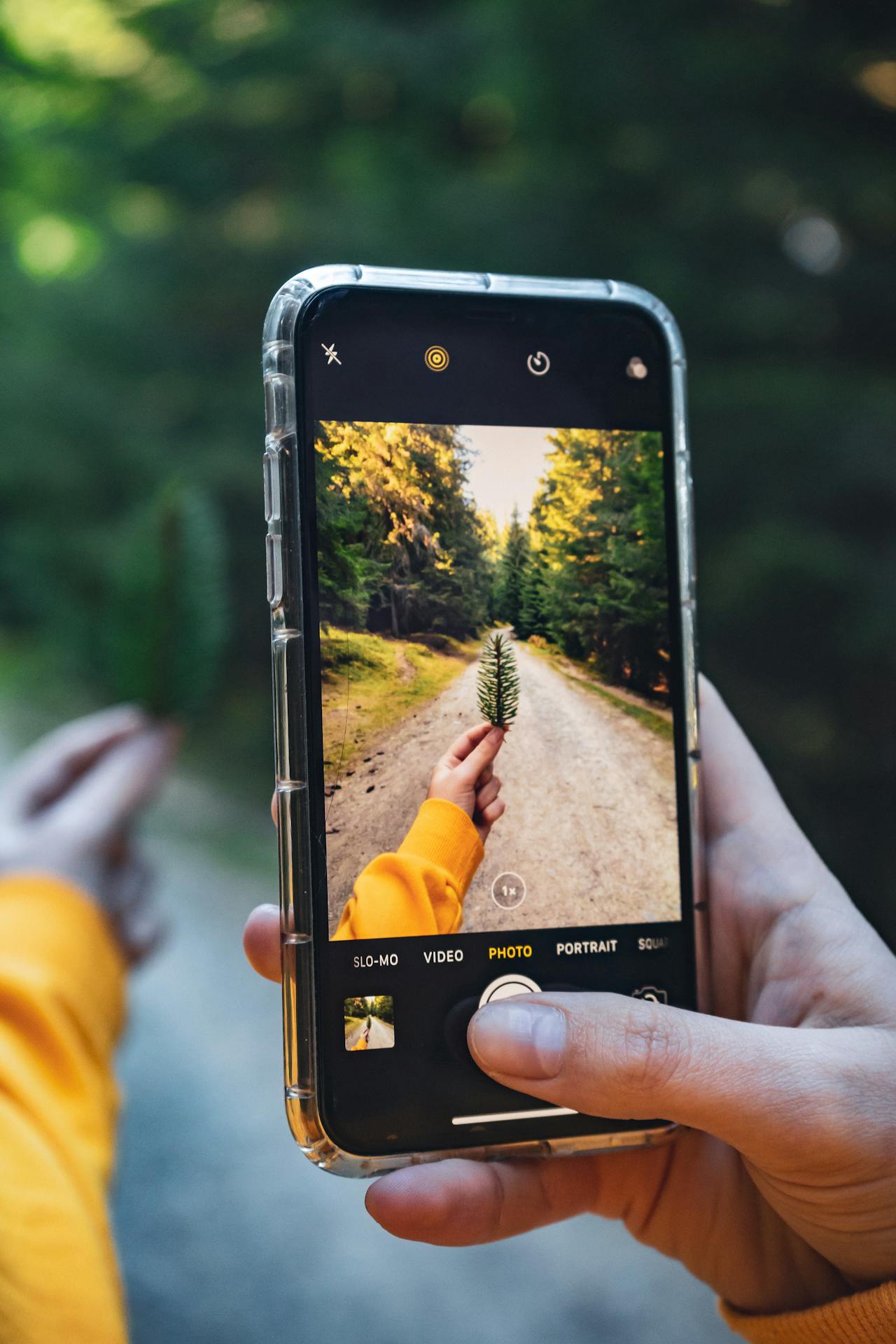
Plant identification apps also raise safety concerns. A study by Campbell et al. (2023) found that the apps rely on AI algorithms trained on photographs with captions, but their accuracy varies widely, ranging from 3.6% to 88.2%. It is well worth digging into to find out which apps provide greater accuracy and which have a high margin of error. Here at Herbal Academy, we’ve long suggested using plant apps as a starting point for identification, then cross-checking with reputable plant identification books and, if possible, an experienced herbalist, forager, or botanist. A good rule is to always have at least three confirming sources—for example, a book, an app, and a human expert—to be sure of a plant’s identity.
Checking AI Authorship: Red Flags to Watch for
Have you ever been bombarded by ads for a new book on social media in what feels like a sophisticated marketing campaign? Did the cover feel overly polished or give AI vibes? When looking at the cover, maybe you didn’t recognize any well-known herbalist names among the blurbs, or you noticed reviewers reporting missing or inaccurate information, or incorrect plant identification. Perhaps the author’s name was unfamiliar, and upon further digging, you found that they didn’t have an online presence, their website contained stock images or (worse) links that didn’t work, and/or they didn’t respond to inquiries for more information. If so, your spidey sense may have been activated that something felt amiss. In any of these cases, it’s very likely that the book was generated, fully or at least in part, by AI.
How to Spot AI-Generated Herbal Content
- Lack of specific information in the author bios.
- Inaccurate images or captions.
- Stock photos with watermarks.
- An author who hasn’t written other books and has no online presence.
- Publisher information that is obscured or not accessible.
- Typos, missing information, and inconsistencies in style and content.
- Lack of personal details or direct or clinical experience.
- No references, footnotes, or index.
- AI-generated images.
Note that AI detectors and verifiers can help assess whether content was AI-generated, but not with 100% accuracy.
Our Commitment to Accurate, Human-Centered Herbal Education
At the Herbal Academy, we take the issue of using AI in herbalism very seriously. We’re deeply connected to our work and committed to sharing accurate, human-centered herbal education grounded in direct and clinical experience, historical tradition, and scientific research that you can trust.
We pride ourselves on our content being created by a team of real, experienced herbalists who work collaboratively across disciplines, including Western herbalism, Chinese medicine, Ayurveda, nutrition, naturopathy, ethnobotany, and nursing. Many of our educators are Registered Herbalists with the American Herbalists Guild. We invite you to get to know our team here: https://theherbalacademy.com/team/
All of our content, including course curricula, books, The Herbarium, blog articles, workshops, intensives, ebooks, and numerous other educational resources, is written by real humans in a collaborative team approach to offer the full range of our team’s experience. Every project goes through a thorough, multistep editorial and fact-checking process by multiple team members, prioritizing expertise in a collaborative approach. We write with your learning in mind, keep a keen eye on safety, and present information based on both scientific research and our team’s vast personal experience with both plants and humans.
In Closing,
AI is here to stay and has value in many fields, but we believe herbalism will always be rooted in humans: lived experience, relationship, and responsibility. Herbalism isn’t just information, it’s a connection that we prioritize, between people and plants, and between practitioners and community. AI can support learning, but it can’t replace the human heart of herbalism—and we’re here to protect, cultivate, and strengthen that.
REFERENCES
Campbell, N., Peacock, J., & Bacon, K. (2023). A repeatable scoring system for assessing Smartphone Applications ability to identify herbaceous plants. PLOS One, 18(4), e0283386. https://doi.org/10.1371/journal.pone.0283386
Down, A. (2025). Detection firm finds 82% of herbal remedy books on Amazon ‘likely written’ by AI. The Guardian. https://www.theguardian.com/books/2025/oct/22/detection-firm-finds-82-of-herbal-remedy-books-on-amazon-likely-written-by-ai
Fraiman, M. (2025). 82% of Amazon “herbal remedies” books in 2025 were likely AI-written. Originality.AI. https://originality.ai/blog/likely-ai-herbal-remedies-books-study
Paun, C., & Schumaker, E. (2025). AI, meet traditional medicine. Politico. https://www.politico.com/newsletters/future-pulse/2025/07/16/artificial-intelligence-meet-traditional-medicine-00455130
About Post Author